
I’ve never had a bike dyno tuned. I’m being honest about that upfront.
But I’ve researched it extensively (surprise), and I’ve come to understand why some riders swear by it and others think it’s unnecessary. The truth is somewhere in between, and it depends entirely on your bike and what you’ve done to it.
Let’s talk about what dyno tuning actually is, when it matters, and when it’s just expensive bragging rights.
What a Dyno Actually Does
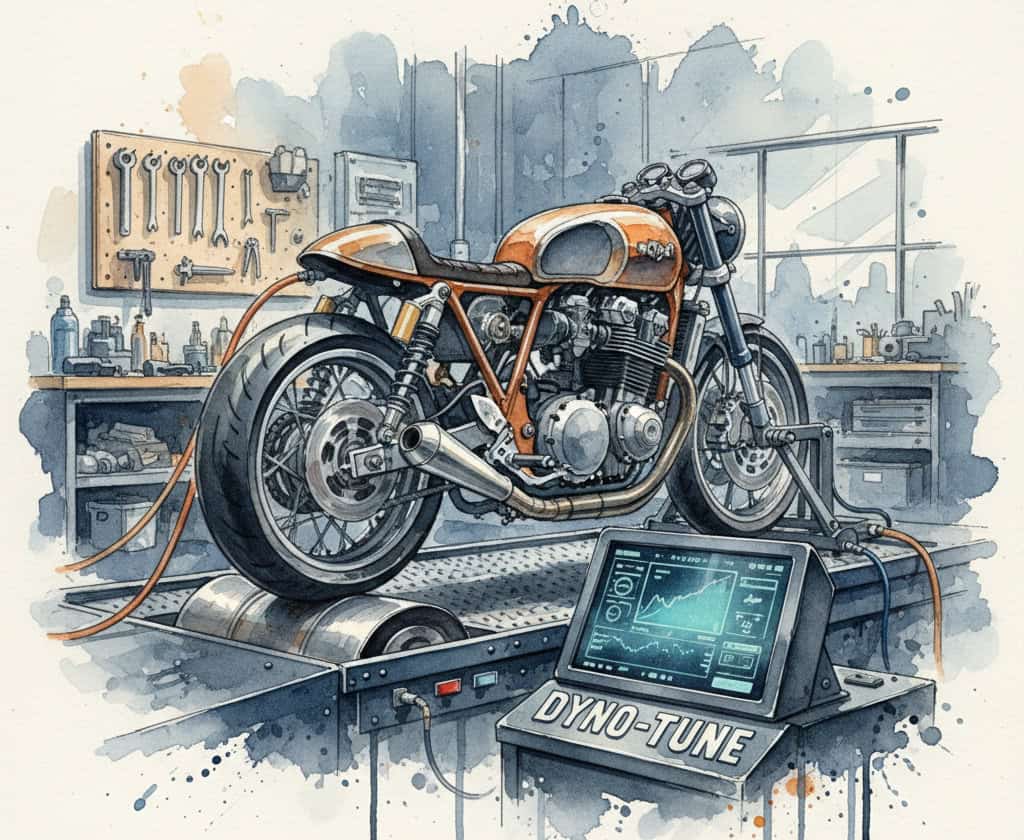
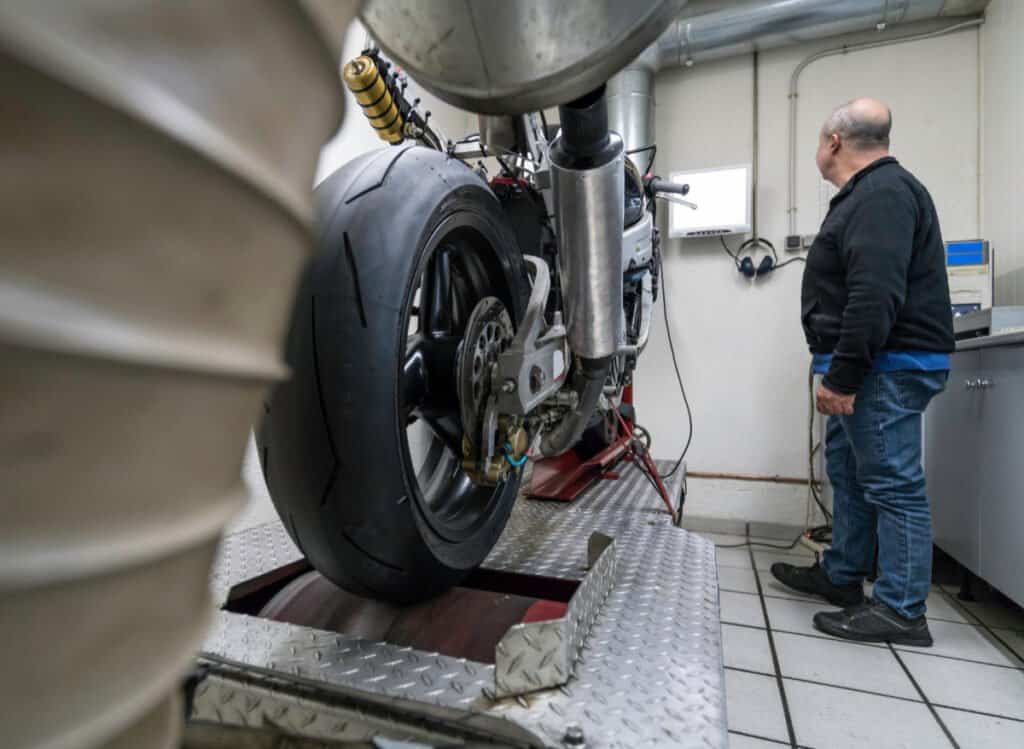
A dynamometer—dyno for short—is essentially a treadmill for motorcycles. Your bike sits on a platform with a heavy roller. The rear wheel spins the roller while the bike is strapped down securely. The dyno measures how much power (horsepower) and torque your engine produces at different RPMs.
But here’s the key: The dyno itself doesn’t tune anything. A dyno only measures. A tuner (human) uses those measurements to know what needs changing in your bike’s fuel delivery and ignition timing to make it run its best. What Is Dyno Motorcycle Tuning And Is It Worth It? Here’s What Riders Have To Say – SlashGear
Think of it like a scale. The scale doesn’t make you lighter—it just tells you what you weigh. What you do with that information is up to you (or in this case, the tuner).
Have you ever wondered what your bike’s actual power output is?
Two Types of Dynos
Inertia dynos (like Dynojet): These measure how quickly your bike accelerates a heavy roller of known weight. They’re simpler, cheaper, and good for baseline power measurements. Learn How a Dynamometer (DYNO) Works – Motocross Action Magazine Most dyno shops use these.
Load-bearing dynos (like SuperFlow or Mainline): These can apply variable resistance to simulate real-world conditions—hills, wind, different loads. They’re more expensive and complex but better for detailed tuning across all throttle positions. Tuning Basics Adventure Motorsports Monroe, WA
For most riders getting a basic tune, inertia dynos work fine. Load-bearing dynos are for serious performance builds or racing applications.
When You Actually Need Dyno Tuning
Here’s the honest answer: If your bike is bone stock, you probably don’t need dyno tuning.
Manufacturers spend millions developing fuel maps that work for stock bikes in various conditions. Your bike runs fine as-is.
You need (or at least benefit from) dyno tuning when:
- You’ve installed an aftermarket exhaust. Changing the exhaust alters airflow, which affects your stock air-fuel ratio and can impact performance. The bike will run, but probably not optimally.
- You’ve added a performance air filter or intake. More air in means you need more fuel to match it, or the bike runs lean (too much air, not enough fuel).
- You’ve done engine modifications. Bigger bore, different cams, head work—anything that changes how much air the engine flows.
- Your bike runs poorly. Rough idle, hesitation, poor throttle response. A dyno tune can help inspect a bike’s health and even detect hidden issues like lean fuel mixtures.
- You want maximum performance from modifications. If you’ve spent money on parts, tuning extracts their full potential.
What modifications have you done to your bike—if any?
What Happens During Dyno Tuning
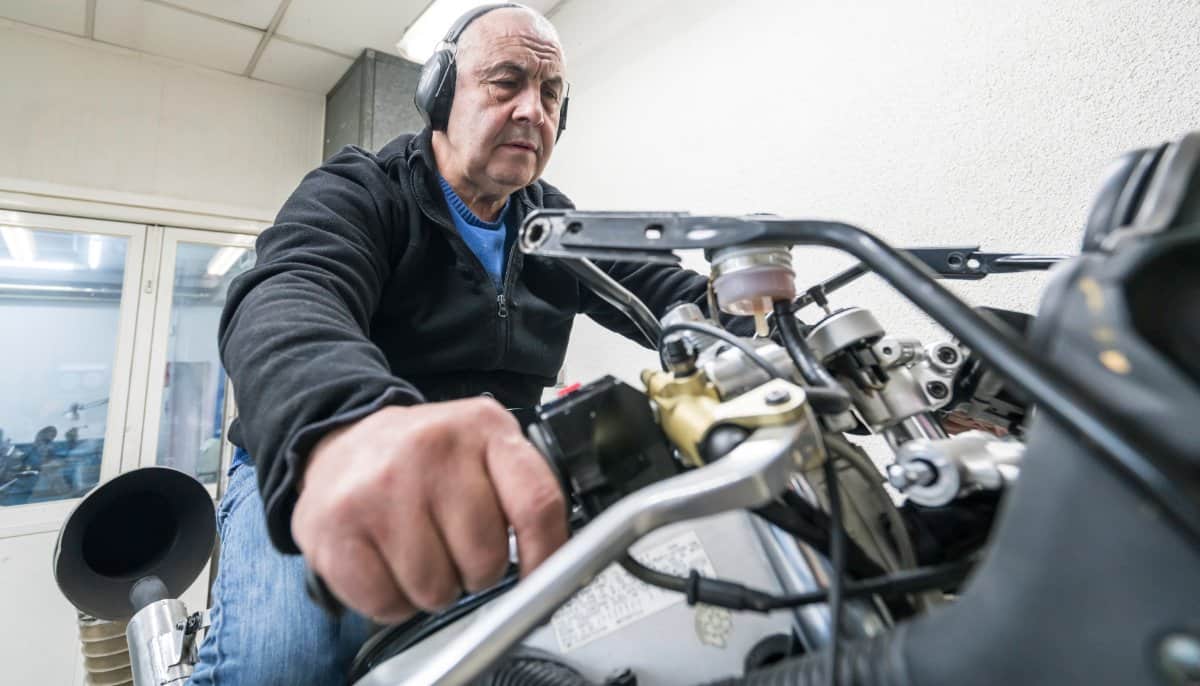
The process typically takes 3-6 hours and involves running your bike at different throttle positions—20%, 40%, 60%, full throttle—across the RPM range. The tuner records the air-fuel ratio from an oxygen sensor in your exhaust, then adjusts fuel delivery to hit optimal ratios (usually 12.9-13.4:1 for most engines).
Adventuremotorsports
Mrpmotorsports
Step by step:
- Baseline run: Measure current power output before any changes
- Adjust fuel mapping: Change how much fuel the engine gets at different RPMs and throttle positions
- Test again: Run another dyno session to see if changes improved things
- Repeat: Keep tweaking until performance is optimized
- Final verification: One last run to confirm everything works across the entire range
The tuner can also adjust ignition timing, throttle response, RPM limits, fan temperatures, and other ECU parameters depending on what your bike’s ECU allows. How Motorcycle Dynamometer Tuning works
Two Ways to Tune: Piggyback vs Flash
Piggyback systems (like Power Commander): A separate unit plugs between your ECU and sensors. It modifies signals to adjust fuel delivery without changing the stock ECU. Pros: reversible, relatively affordable. Cons: limited to fuel adjustments, adds another component.
ECU flashing: Directly reprogramming your bike’s ECU by uploading new software through the diagnostic port. This allows changes to fuel, ignition timing, throttle mapping, rev limits, and more. Dyno Tuning / ECU Flashing – Right Side Up Kreations Pros: more comprehensive control. Cons: may void warranty, requires specialized equipment, harder to reverse.
Most modern tuners prefer ECU flashing for its flexibility, but piggyback systems still work well for basic modifications.
Would you feel comfortable flashing your bike’s ECU, or would you rather leave it stock?
What You Actually Gain
A proper dyno tune with correct air-fuel ratios will make a bike run cooler, faster, and for a longer time. It also can improve fuel economy and engine temperature regulation. What Is Dyno Motorcycle Tuning And Is It Worth It? Here’s What Riders Have To Say – SlashGear
Real-world benefits:
- Smoother power delivery: Eliminates flat spots or hesitation
- Better throttle response: Crisper, more immediate reaction to throttle input
- More power: Typically 5-10 hp and 5-10 lb-ft of torque from tuning alone (more with mods)
- Improved fuel economy: Properly tuned bikes often get better mileage
- Cooler running temps: Correct air-fuel ratios reduce heat
One rider on a Canadian forum said: “The throttle response/power delivery was crisp after the tune. I remember thinking ‘Why didn’t I do this sooner?'”
The Downsides
Cost: Dyno tuning runs between $200-$500 depending on complexity and location. That’s just for tuning—add costs for any parts or modifications.
Time: You’re without your bike for several hours or a full day.
Warranty concerns: ECU flashing may void manufacturer warranty, especially if done improperly or outside authorized service centers. Dyno Tuning / ECU Flashing – Right Side Up Kreations
Diminishing returns on stock bikes: If you haven’t modified anything, the gains are minimal and probably not worth the cost.
Before You Book a Dyno Session
If you’re getting your bike tuned, make sure it’s properly maintained first: fresh oil, clean air filter, new spark plugs (NGK recommended), and a good exhaust system. Adventuremotorsports Mrpmotorsports Building a tune on a dirty air filter or worn plugs means the tune won’t be accurate once you fix those issues.
Also, understand that dyno numbers are only comparable to the same dyno under the same conditions. Different dynos read differently, and temperature, humidity, and barometric pressure all affect results. Learn How a Dynamometer (DYNO) Works – Motocross Action Magazine Don’t obsess over comparing your dyno sheet to someone else’s from a different shop.
If you’ve had your bike dyno tuned, did you notice a real difference afterward?
My Take
For a stock bike? Dyno tuning is probably unnecessary unless you’re chasing every last bit of performance or troubleshooting an issue.
For a modified bike? It’s worth considering, especially if you’ve changed exhaust, intake, or done engine work. You’ve already spent money on parts—tuning ensures they actually work together properly.
For a heavily modified or race bike? Absolutely essential.
The question isn’t “Is dyno tuning good?” It’s “Does my specific bike need it?” And the honest answer for most street riders with stock or lightly modified bikes is: probably not.
But if you’ve gone down the modification rabbit hole, tuning is how you make all those parts actually deliver what they’re supposed to.
Have you ever had a bike dyno tuned? Was it worth it, or did you wish you’d saved the money?