
If you’ve been shopping for a motorcycle recently, you’ve probably seen “Euro 5 compliant” mentioned in specs. Or maybe you’ve noticed your favorite 1000cc sport bike got discontinued. Or wondered why new bikes have massive exhaust systems compared to older models.
Welcome to Euro 5—the European Union’s latest emission standards for motorcycles.
I’m not an engineer or environmental scientist. But I researched this topic because I wanted to understand why the motorcycle landscape keeps changing and what it means for riders like us.
Here’s what actually matters.
Why Euro Standards Exist
The European Union wants cleaner air. Motorcycles (and cars) contribute to air pollution—carbon monoxide, nitrogen oxides, hydrocarbons, particulate matter. This stuff is worse in cities where traffic concentrates.
Since 1992, the EU has been progressively tightening emission standards. First for cars (Euro 1 in 1992), then motorcycles (Euro 1 in 1999). Each new “Euro” standard sets stricter limits on how much pollution vehicles can emit.
The goal: reduce harmful emissions without destroying the performance or practicality of vehicles.
Does it work? Since Euro 1 for motorcycles, hydrocarbons and nitrogen oxides have dropped by 96.6%, and carbon monoxide by 92.3%. So yeah, it’s working.
Do you know what Euro standard your bike meets?
What Euro 5 Actually Means
Euro 5 for motorcycles came into effect January 1, 2020 for new models, and January 1, 2021 for all new bikes sold.
The emission limits:
- Carbon Monoxide (CO): 1.0 g/km
- Hydrocarbons (HC): 0.1 g/km
- Nitrogen Oxides (NOx): 0.06 g/km
- Particulate Number (PN): 6 × 10¹¹ particles/km (for engines over 150kW)
What does g/km mean? Grams per kilometer—how much of each pollutant a bike emits per kilometer traveled. Lower numbers = cleaner.
Compare that to Euro 1 (1999):
- Carbon Monoxide: 13.0 g/km
- Hydrocarbons: 3.0 g/km
- Nitrogen Oxides: 0.3 g/km
The progress is massive. Euro 5 bikes emit a fraction of what Euro 1 bikes did.
The Quick Evolution: Euro 1 to Euro 5
Euro 1 (1999): First motorcycle emission standards. Basic limits, minimal enforcement.
Euro 2 (2003): Tighter limits. Required some catalytic converters and improved engine tech.
Euro 3 (2006): Introduced oxygen sensors, closed-loop catalytic converters, better fuel injection.
Euro 4 (2016): Added on-board diagnostics (OBD Stage I), durability testing, evaporative emission controls. Real-world testing focus.
Euro 5 (2020): Aligned motorcycle emissions closer to car standards (Euro 6). Added particulate number limits for powerful engines.
Each step required manufacturers to redesign engines, exhaust systems, and fuel delivery. That’s why bikes keep changing—it’s not just styling, it’s compliance.
Have you noticed bikes getting more expensive or certain models disappearing?
What Changed for Riders
1. Bigger, more complex exhausts
Compare a 1983 Honda CB1000 Custom to a 2025 Honda CB1000 Hornet. The new bike’s exhaust is massive—full of catalytic converters and emission control tech. The old bike had simple pipes.
Exhaust design changed dramatically because of Euro standards.
2. Some bikes disappeared
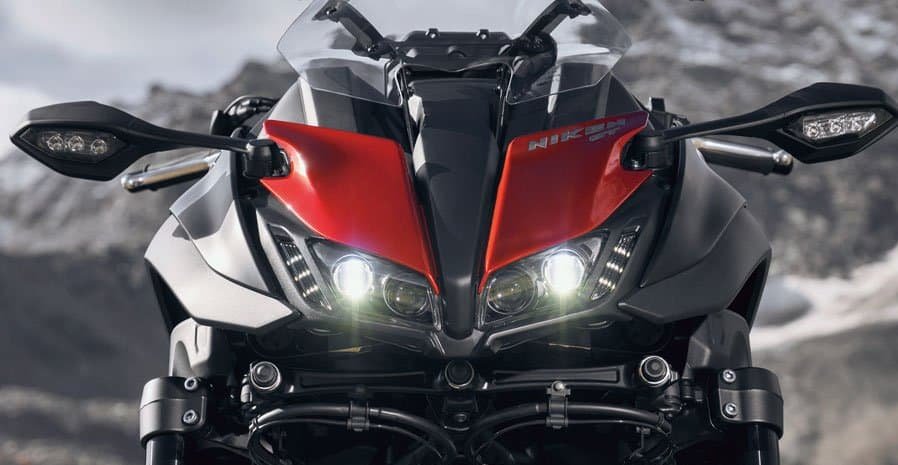
Certain models couldn’t meet Euro 5 without expensive redesigns. Manufacturers discontinued them instead. The Yamaha Niken GT? Discontinued in 2024 after the 2023 Euro 5-compliant refresh.
3. 1000cc sport bikes dying out
High-revving engines struggle to meet emission limits because of how valves and combustion work at high RPM. Many manufacturers shifted to 900cc platforms instead. Old-school literbikes for the road? Becoming rare.
4. Prices went up
New tech costs money. Catalytic converters, ride-by-wire throttles, advanced fuel injection, on-board diagnostics—all add to manufacturing costs. That gets passed to buyers.
5. Better fuel efficiency (potentially)
Cleaner engines often use fuel more efficiently. Long-term, you might save on fuel costs. But upfront, you’re paying more.
Euro 5+ Coming in 2025
“Euro 5+” is an informal term for the next phase, implementing January 1, 2025.
What’s changing:
- OBD-II diagnostics – More comprehensive monitoring of emission systems
- Durability requirements – Systems must maintain low emissions for 20,000+ km
- Real Driving Emissions (RDE) testing – Testing in real-world conditions, not just labs
- Stricter noise standards – Likely coming with Euro 6
Essentially: tighter enforcement, longer-lasting emission systems, real-world testing instead of just lab tests.
Euro 6 for motorcycles hasn’t been officially announced yet, but it’s expected to follow similar patterns.
Are you concerned about emission tech making bikes more expensive to maintain long-term?
The 2035 Deadline
The EU (and UK, Canada, Norway, China, California) plans to ban sales of new internal combustion engine (ICE) vehicles by 2035.
This doesn’t mean you can’t ride your current bike. It means manufacturers won’t be able to sell new gasoline-powered bikes after 2035.
Will everyone switch to electric by then? Will ICE bike sales spike right before the deadline? Will the ban actually happen?
Nobody knows. But 2035 is only a decade away.
My Take
I appreciate cleaner air. I don’t want to breathe pollution any more than anyone else does.
But I also see the consequences: discontinued bikes, higher costs, vanishing high-performance models, increasing complexity that might make long-term ownership more expensive.
Euro standards are working—emissions have dropped dramatically. But they’re also reshaping what motorcycles look like, how much they cost, and which ones even exist.
Is it worth it? Probably. Cleaner air benefits everyone. But it’s not without trade-offs.
What do you think? Are Euro standards improving motorcycles or ruining them? Would you consider going electric when the time comes?