
I haven’t ridden in years, but I still remember the fundamentals drilled into me during training. And honestly? Even experienced riders need reminders sometimes.
This isn’t a comprehensive safety manual. It’s not trying to cover everything. It’s just a collection of practical tips—some obvious, some easily forgotten—that can keep you safer on the road.
Whether you’re new to riding or coming back after years away, these basics matter.
Gear: It’s Not Optional
Let’s start with the obvious: wear proper gear.
Not because it looks cool (though it can). Not because it’s the law (though sometimes it is). But because asphalt doesn’t care how skilled you are, and neither does the car that didn’t see you.
The essentials:
- Helmet – Non-negotiable. Full-face is best.
- Jacket – Preferably with armor in shoulders, elbows, back
- Gloves – Your hands instinctively go down first in a fall
- Boots – Ankle protection matters more than you think
- Pants – Jeans won’t cut it. Get proper riding pants or at least kevlar-lined jeans.
I know it’s tempting to skip gear on short rides or hot days. Don’t. Most accidents happen close to home, and road rash doesn’t care if you were “just going to the shops.”
What gear do you actually wear on every ride—honestly?
Know the Rules (Even the Boring Ones)
Traffic laws exist for everyone, including motorcyclists. Shocking, I know.
Understanding right-of-way, speed limits, lane positioning—these aren’t just bureaucratic annoyances. They’re the shared language that keeps everyone from crashing into each other.
And yeah, some drivers don’t follow the rules. All the more reason you should—it’s your best defense when someone else screws up.
Choose a Bike You Can Handle
Here’s something nobody wants to hear: if you can’t comfortably plant both feet on the ground at a stop, the bike is too tall for you.
Balance issues at stops lead to drops. Drops lead to damage, injury, and embarrassment. None of these are worth it just to ride something bigger than you need.
Start with something manageable. Build skills. Move up when you’re ready. There’s no shame in riding a bike that fits your body and skill level.
Have you ever struggled with a bike that was too big or heavy for you?
Maintenance: Boring But Critical
Before every ride, check:
Tires: Proper pressure, adequate tread, no visible damage
Brakes: Firm lever feel, no sponginess
Fluids: Oil, brake fluid, coolant
Chain: Properly tensioned and lubricated
Lights: All signals, brake lights, headlight working
Regular maintenance prevents breakdowns—some inconvenient, some expensive, all avoidable. A neglected chain can snap. Low oil can seize an engine. Worn brake pads can fail when you need them most.
These checks take five minutes. They can save your life or at least save you from being stranded on the side of the road.
Weather Changes Everything
Rain: Reduce speed, increase following distance, avoid painted lines and metal surfaces. Everything is slippery when wet—especially things you normally don’t think about.
Cold: Layer up. Numb hands can’t operate controls properly. Heated grips are worth every penny. Remember that tires need warmth to grip properly—ride cautiously until they warm up.
Heat: Stay hydrated. Wear breathable gear but don’t skip protection. Take breaks. Heat exhaustion impairs judgment just like alcohol does.
What weather condition makes you most nervous when riding?
Be Visible or Be Vulnerable
Motorcycles are small. Drivers don’t see us. This is reality, not paranoia.
Make yourself visible:
- Bright or reflective gear
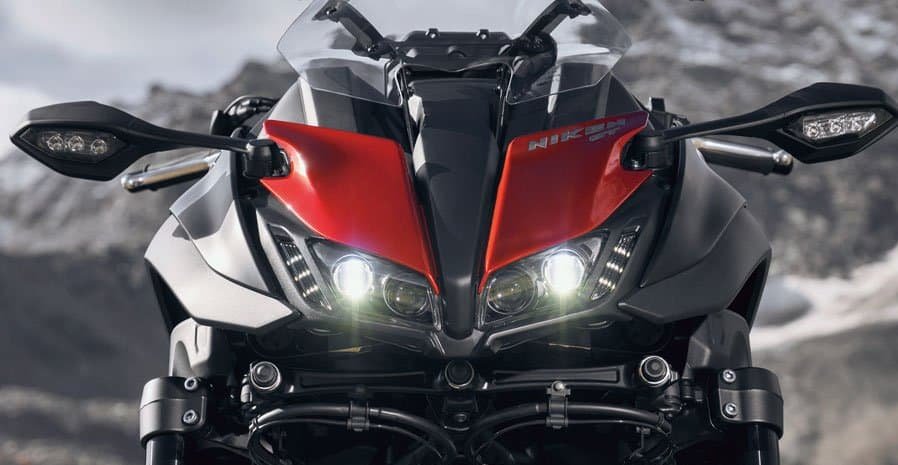
- Headlight always on
- Consider auxiliary lights
- Don’t hide in blind spots
- Position yourself where you can be seen
I’ve had someone step directly into my path while looking straight at me. They genuinely didn’t see me. At 35 mph. In broad daylight.
If you think “they see me,” you’re wrong. Ride like you’re invisible, because often you are.
Defensive Riding Isn’t Paranoia
Assume every driver is about to do the stupidest thing possible. Because eventually, one will.
Defensive riding means:
- Maintaining safe following distance
- Scanning constantly for hazards
- Having an escape route planned
- Not trusting turn signals
- Expecting doors to open, cars to swerve, pedestrians to step out
This isn’t about being scared. It’s about being prepared. The difference between a close call and a crash is often just awareness and reaction time.
Do you ride defensively, or do you trust other drivers more than you probably should?
Curves and Turns: Slow In, Fast Out
Approach curves at a speed you can handle. You can always add throttle mid-corner if you’ve got room. You can’t brake hard while leaned over without risking a fall.
Technique basics:
- Look through the turn, not at the pavement
- Lean with the bike, don’t fight it
- Smooth inputs—no sudden braking or acceleration
- Body position matters (knees against tank, weight slightly inside)
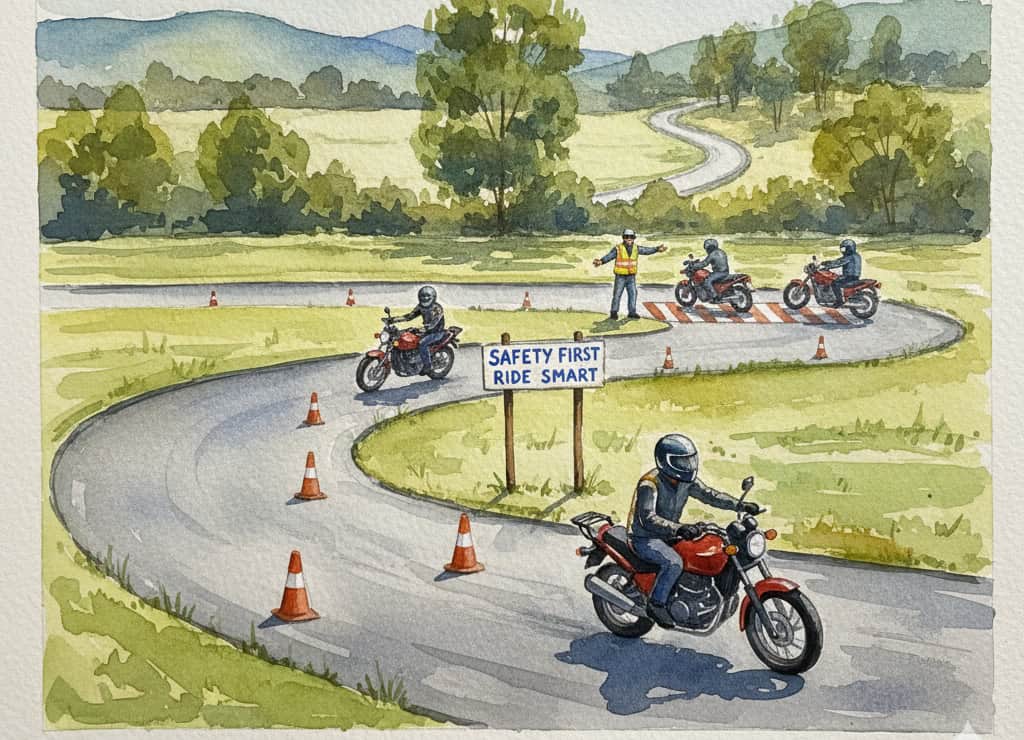
Practice in safe environments. Empty parking lots. Low-traffic roads. Not on unfamiliar mountain passes at dusk.
Stay Focused
Distractions kill. Literally.
Your phone can wait. Your navigation should be positioned where a quick glance doesn’t take your eyes off the road for more than a second. That conversation with your passenger can happen at the next stop.
Riding demands attention. Full attention. All the time.
Keep Learning
I don’t care how long you’ve been riding—there’s always something to learn or skills that have gotten rusty.
Low-speed maneuvers are harder than highway riding. When’s the last time you practiced tight U-turns or emergency stops?
Refresher courses aren’t just for beginners. Veteran riders benefit from revisiting fundamentals, especially if they’ve taken time off.
Check out resources like Ride Like a Pro, Jerry Palladino. His videos quickly demonstrate that even experienced riders have gaps in their skills, particularly in low-speed handling.
When was the last time you practiced emergency maneuvers in a controlled environment?
Road Rage: Don’t
Someone cut you off? Let it go.
Driver being aggressive? Let them pass.
Feel insulted by another motorist? Get over it.
Road rage accomplishes nothing except increasing your risk of crashing. You’re on a motorcycle—you will always lose a physical confrontation with a car.
Keep your cool. Ride defensively. Get where you’re going safely. That’s the goal.
Don’t Drink and Ride (Obviously)
This shouldn’t need saying, but: never ride after drinking. Ever.
Alcohol impairs judgment, slows reaction time, affects coordination. All things you absolutely need while riding.
The statistics are grim. A significant percentage of motorcycle accidents involve riders who’d been drinking. Don’t become a statistic.
If you’ve had a drink, call a cab. Leave the bike. Pick it up tomorrow. It’s really that simple.
Angry? Tired? Stay Home.
Some days you’re not in the right headspace to ride safely.
If you’re angry, you’ll ride faster and take more risks. If you’re exhausted, your reaction time suffers. Either way, you’re compromising your safety.
The bike will still be there tomorrow. Ride when you’re actually capable of riding well.
Have you ever gone for a ride when you probably shouldn’t have?
Want to Go Fast? Go to a Track
Public roads aren’t racetracks. They’re full of cars, pedestrians, obstacles, and unpredictable conditions.
If you want to push your limits, do it at a track day where:
- The environment is controlled
- Medical staff are on standby
- You can actually learn from instructors
- You won’t take anyone else out if you crash
Track days aren’t just safer—they’ll actually make you a better rider. You’ll learn proper technique instead of just going fast on public roads and calling it skill.
Final Thoughts
Most of this is common sense. But common sense isn’t always common practice.
Riding safely isn’t about being paranoid or timid. It’s about being prepared, aware, and respectful of the machine and the road.
I haven’t ridden in years, but when I do get back on a bike, these fundamentals will still matter. They always do.
What’s your most important safety tip that didn’t make this list? What did you learn the hard way?