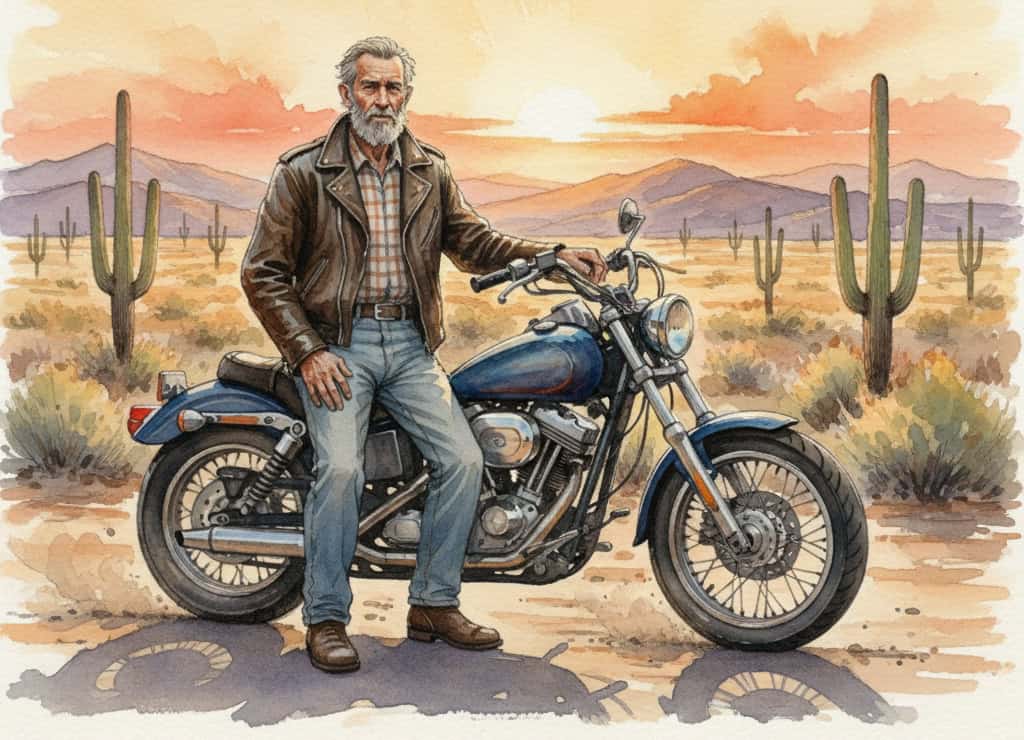

I’m 50-something, living in Japan, haven’t ridden in years, and I’m obsessed with a discontinued motorcycle I’ve never owned.
If that doesn’t scream “it’s never too late,” I don’t know what does.
But here’s the thing about getting back into motorcycles later in life—or starting for the first time: it’s not just about wanting to ride. It’s about whether circumstances actually allow it.
Money. Time. Physical ability. Family obligations. Living situation. Fear. Practicality.
All the things that make “just do it” advice sound tone-deaf when you’re actually weighing the decision.
So let’s talk honestly about riding motorcycles later in life—the appeal, the obstacles, and what it actually takes.
Why the Idea Appeals
There’s something about motorcycles that doesn’t age out of us.
Could be the freedom—the idea of just getting on a bike and going somewhere without overthinking it.
For some, it’s reclaiming something from our younger selves. A time when we rode, or wanted to ride, before life got complicated.
Perhaps it’s the simplicity. A motorcycle is mechanical, direct, uncomplicated compared to everything else in our lives.
Or maybe it’s just that feeling of being fully present—focused on the road, the bike, the moment—instead of mentally replaying the past or worrying about the future.
Whatever it is, the appeal doesn’t disappear just because we get older.
What draws you to motorcycles—nostalgia, freedom, or something else entirely?
The Real Obstacles
But wanting to ride and actually riding are different things.
Financial reality: Bikes aren’t cheap. Insurance, gear, maintenance, storage—it adds up. For many of us later in life, discretionary income goes to other priorities. Kids’ education. Aging parents. Retirement savings. A bike feels like a luxury we can’t justify.
Physical considerations: We’re not 25 anymore. Strength, flexibility, reaction time, balance—all decline with age. Heavy bikes are harder to handle. Low-speed maneuvers take more effort. Dropping a bike in a parking lot becomes a legitimate concern.
Time constraints: Work, family responsibilities, caregiving—where does riding fit? Weekend warrior status requires having free weekends. For many of us, those don’t exist.
Fear: If you haven’t ridden in decades, the fear is real. Traffic is faster. Distracted drivers are everywhere. The consequences of a crash at 50+ are more serious than at 25.
Living situation: Do you have garage space? Off-street parking? Some of us live in apartments or situations where owning a motorcycle isn’t practical.
I’m not listing these to be discouraging. I’m listing them because they’re real, and pretending they’re not doesn’t help anyone.
Which obstacle feels biggest for you—money, time, physical concerns, or something else?
The Physical Reality
Let’s be honest: riding a motorcycle is physically demanding.
Balance and strength matter. Holding up a 200+ kg bike at a stoplight requires leg strength. Maneuvering at low speeds requires core strength and balance.
Reaction time declines with age. We’re slower to process and respond to hazards. This doesn’t mean we can’t ride safely—it means we need to compensate with experience and awareness.
Flexibility decreases. Getting on and off some bikes becomes awkward. Holding riding positions for long periods causes discomfort.
But here’s the counterargument: riding also keeps you physically active. It requires engagement—core strength, balance, coordination, focus. Use it or lose it applies.
Many older riders say motorcycling keeps them feeling younger and more capable. The physical demands become part of staying fit, not evidence you’re too old.
It’s a balance. Know your limits. Choose an appropriate bike. Don’t try to muscle something too heavy or aggressive.
Choosing the Right Bike Matters
If you’re returning to riding or starting late, don’t buy the bike you wanted at 25.
Consider:
- Weight: Can you comfortably hold it upright at stops? Pick it up if it falls?
- Seat height: Can you flat-foot or at least confidently reach the ground?
- Ergonomics: Is the riding position comfortable for your body?
- Power: Do you need a literbike, or will something more moderate suit you better?
Cruisers, touring bikes, and some adventure bikes suit older riders well—comfortable ergonomics, manageable weight, predictable power delivery.
The Yamaha Niken GT, for example, appeals to returning riders partly because of the enhanced front-end stability. The dual front wheels provide confidence in conditions where a conventional bike might feel sketchy.
(Yes, I’m biased. But the point stands—choose a bike that suits your current needs, not your ego.)
If you’re riding or planning to ride, what bike suits your current situation best?
The Safety Question
Older riders have advantages: experience, patience, better judgment, less need to prove anything.
We’re less likely to ride recklessly. We understand consequences. We’re more cautious in traffic.
But we also have disadvantages: slower reactions, reduced night vision, possibly declining hearing.
The solution isn’t “don’t ride.” It’s “ride smarter.”
- Take a refresher course (even if you rode for years before)
- Wear proper gear always
- Ride defensively
- Avoid high-risk situations (rush hour traffic, bad weather, unfamiliar roads at night)
- Know your limits
Defensive riding becomes even more important as we age. Assume every driver hasn’t seen you. Plan escape routes. Leave extra space.
The Community Aspect
One unexpected benefit of motorcycling later in life: the community.
Riding groups, clubs, online forums—motorcyclists tend to be welcoming regardless of age. There’s camaraderie in shared passion.
For people who feel isolated (retired, kids moved away, social circles shrinking), the motorcycle community offers connection.
Group rides provide structure and social interaction. Even just waving to another rider on the road creates momentary connection.
This matters more than we sometimes admit.
Are you a solo rider, or does the community aspect appeal to you?
My Situation
I haven’t ridden in years. Financial constraints, living in Japan without easy access to the bikes I want, family obligations—all the usual obstacles.
But I’m still researching. Still watching videos. Still building this site. Still talking to UK dealers about Nikens in case circumstances change and I move back to help my Dad.
Does that make me foolish? Maybe. Or maybe it means the dream doesn’t die just because current reality doesn’t accommodate it.
For some of us, “it’s never too late” means “maybe not now, but possibly later.” And keeping that possibility alive matters.
The Honest Answer
Is it too late to ride motorcycles later in life?
No. People start or return to riding in their 50s, 60s, 70s successfully.
But is it realistic for everyone?
Also no. Circumstances matter. Money matters. Physical ability matters. Living situation matters.
The inspirational “you can do anything” advice ignores reality. Some of us genuinely can’t make it work right now—and that’s okay. It doesn’t mean we’ve failed or given up on ourselves.
The best answer: If you want to ride and can make it work—physically, financially, practically—then do it. Take a training course. Start small. Build confidence gradually.
If you can’t make it work right now, that doesn’t mean never. Circumstances change. Keep the dream alive if it matters to you.
And if you ultimately decide it’s not worth the risk, money, or effort—that’s a valid choice too. You’re not less of a person for choosing differently.
Where are you in this decision—actively riding, planning to start, or keeping the dream alive for later?
For What It’s Worth
I’m not here to tell you what to do. I’m figuring it out myself.
But I do know this: the desire to ride doesn’t disappear just because we get older. And there’s value in acknowledging that desire, even if acting on it isn’t currently possible.
Maybe that means researching bikes obsessively and building a website about one you’ve never owned.
Maybe that means taking a weekend safety course just to see if you still have it.
Maybe that means finally buying that bike you’ve been thinking about for years.
Or maybe it means accepting that right now isn’t the time, but keeping the door open for when it might be.
What does “it’s never too late” mean for you?