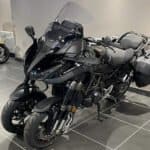
Everyone talks about the Niken’s front end. Fair enough—it’s got two wheels up there doing physics that looks impossible.
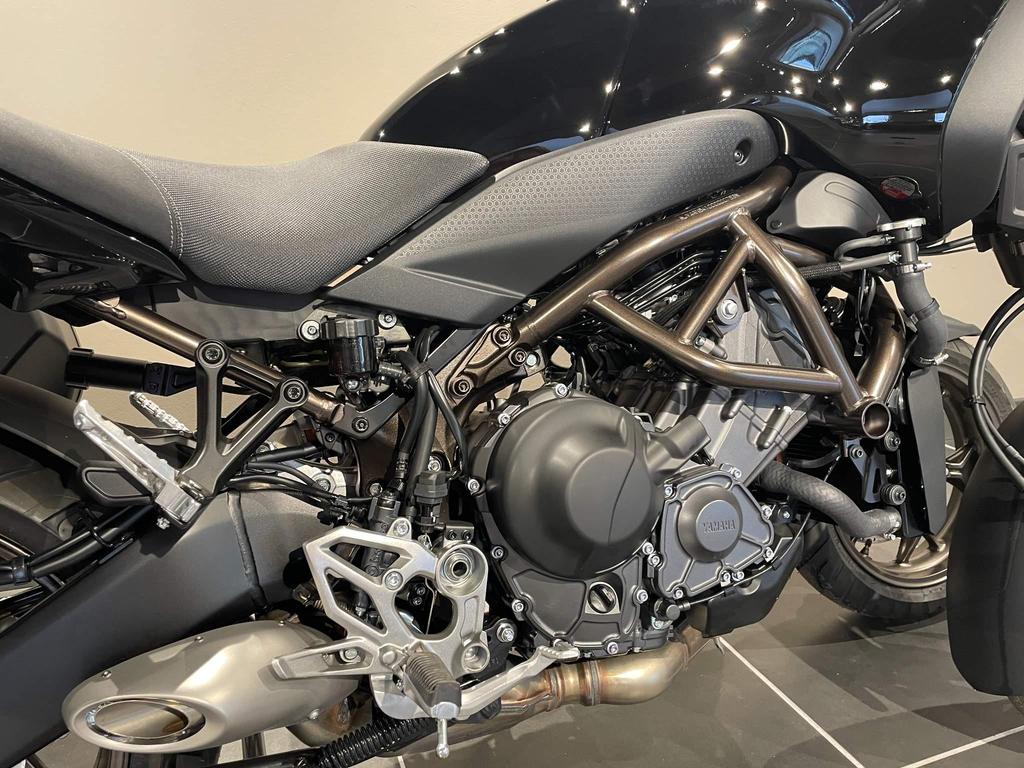
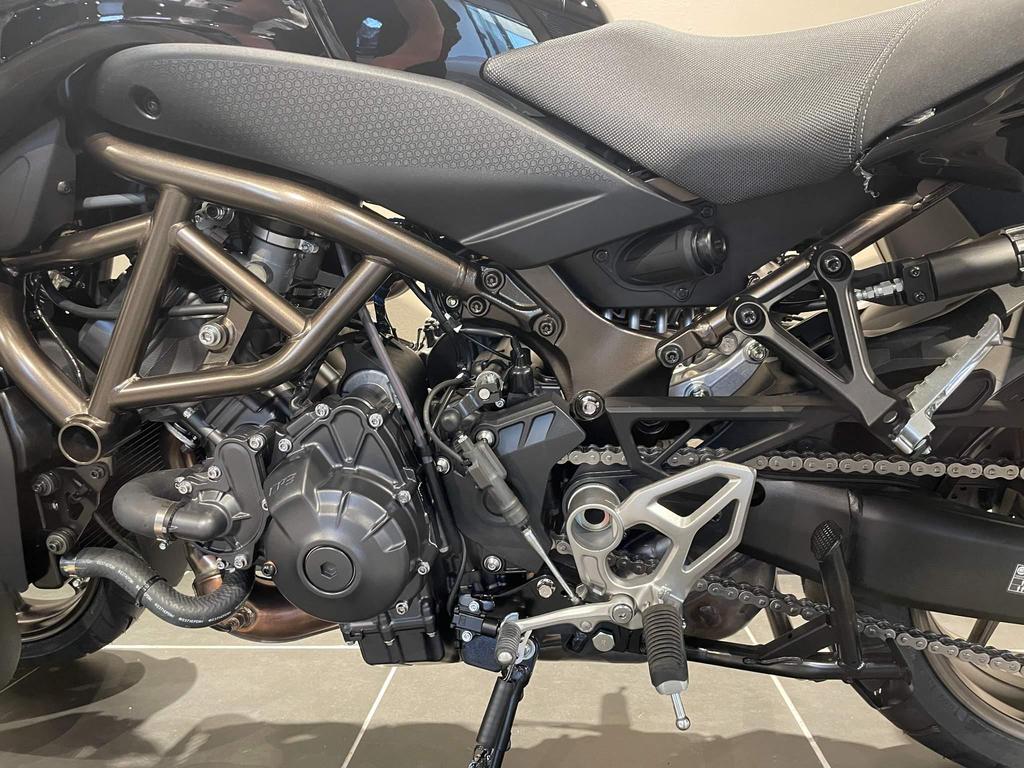
But let’s talk about what powers this weird machine: Yamaha’s CP3 triple-cylinder engine. Because having brilliant front-end grip means nothing if the engine can’t deliver power smoothly enough to use it.
Spoiler: The CP3 is perfect for this application.
The CP3 Triple: What It Is
Original Niken (2018-2022): 847cc liquid-cooled inline-triple producing around 115bhp and 64.5 lb-ft of torque.
2023-2024 Update: 890cc (technically 888cc) with the same configuration but more displacement, 8% heavier crankshaft, and better low-end grunt.
The extra displacement came from lengthening the stroke, not widening the bore. This matters because longer strokes favor torque over top-end scream—exactly what a sport-tourer wants.
Why a Triple?
Three cylinders sits in a sweet spot that most people don’t appreciate until they’ve ridden one:
More character than a parallel twin. You get that distinctive triple soundtrack—not as thumpy as a twin, not as clinical as an inline-four. It’s melodious. People notice.
More tractable than an inline-four. Fours are glorious at 10,000 rpm. Triples deliver usable power from 3,000 rpm up. For real-world riding (passing cars, accelerating out of corners, not being in the perfect gear), this is better.
Compact packaging. Narrower than a four-cylinder, so the engine doesn’t make the bike wider than it needs to be. Given the Niken already has two front wheels taking up space, keeping the engine slim helps.
Linear torque curve. The CP3 doesn’t have a wild power band. It pulls smoothly from low revs to redline. This predictability is crucial on the Niken—you need to trust what the engine will do when you’re learning to exploit that front-end grip.
Riding Modes (Because It’s 2018-2024)
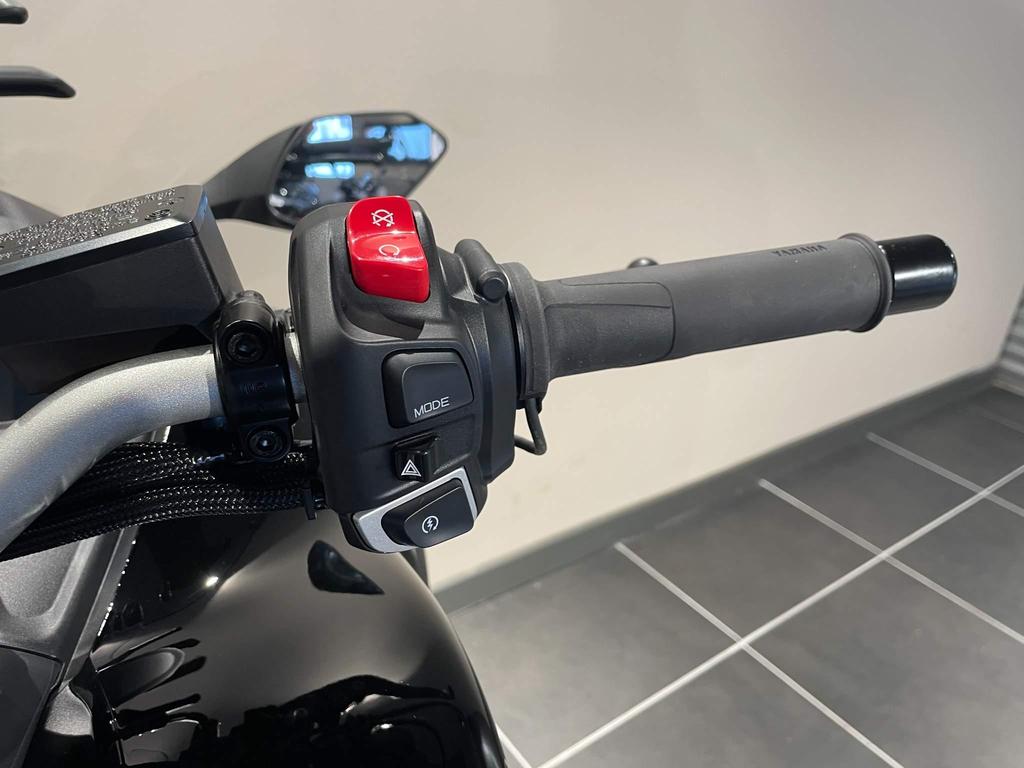
The Niken GT came with multiple riding modes:
- Street Mode: Full power, standard throttle response. The default.
- Sport Mode: Sharper throttle, more aggressive response. For when you’re feeling it.
- Rain Mode: About 18% less power, gentler throttle. For when the road is sketchy.
- Custom Mode: Build your own profile. (I have opinions about whether most people actually use this, but it’s nice to have.)
Do you need riding modes? Debatable. But they’re standard on premium sport-tourers now, and the Niken’s rain mode is genuinely useful when the roads are wet and you want extra margin.
Quick Shifter: Better in 2023
Original (2018-2022): Clutchless upshifts only. Pull the throttle, bang the shifter up, smooth change.
2023-2024: Bidirectional. Clutchless upshifts and downshifts. The electronics blip the throttle on downshifts automatically.
This matters more than it sounds like it should. A proper bidirectional quick shifter transforms the riding experience—no more thinking about the clutch, just focus on where you’re going and what gear you need.
And on a bike with this much grip, being able to slam down two gears mid-corner without upsetting anything is brilliant.
Traction Control (Two Levels Plus Off)
The Niken has traction control with two intervention levels and an off switch.
Do you need it? With two wheels up front providing massive grip, the rear wheel is unlikely to spin unless you’re deliberately trying or conditions are genuinely terrible.
But it’s there. It works. And if you’re caught out in unexpected rain or diesel on the road, it’s one less thing to worry about.
Ride-by-Wire (2023 Only)
The 2023 update added electronic throttle. Some people hate this on principle—they want a cable connecting their wrist directly to the engine.
I get it. But ride-by-wire enables:
- More precise control
- Better integration with riding modes and traction control
- Euro 5 emissions compliance
- Smoother power delivery
Done badly, ride-by-wire feels disconnected and vague. Yamaha’s been doing this for years (they call it YCC-T), and they’ve gotten good at it. The 2023 Niken’s throttle feels natural—you wouldn’t know it’s electronic if nobody told you.
What It Feels Like to Ride
Here’s the thing about the Niken’s engine: it needs to work harder than most sport-tourers because it’s hauling 270kg of motorcycle.
But the CP3 handles it easily. There’s enough torque that you’re never hunting for revs. Highway passing? Just roll on. Twisty roads? The engine pulls cleanly out of every corner.
And because the front end has so much grip, you can actually use the power. On a conventional bike, accelerating hard out of a decreasing-radius corner on suspect pavement is risky. On the Niken, it’s Tuesday.
The enhanced stability means you can exploit the engine’s performance in situations where you’d normally be tentative. That’s the real advantage—not just having power, but being able to confidently deploy it.
The Bottom Line
The CP3 isn’t the most powerful engine in the sport-touring class. It’s not trying to be.
It’s smooth, predictable, characterful, and perfectly matched to what the Niken needs: strong midrange torque, linear delivery, and enough top-end to keep things interesting.
Yamaha could have used a different engine. They could have detuned a four-cylinder. They could have borrowed the parallel-twin from the Tracer 700.
But they chose the CP3, and they were right.
It’s the perfect heart for a weird machine.
Niken owners: How do you feel about the CP3? Wish it had more power, or is it just right? Let me know in the comments.