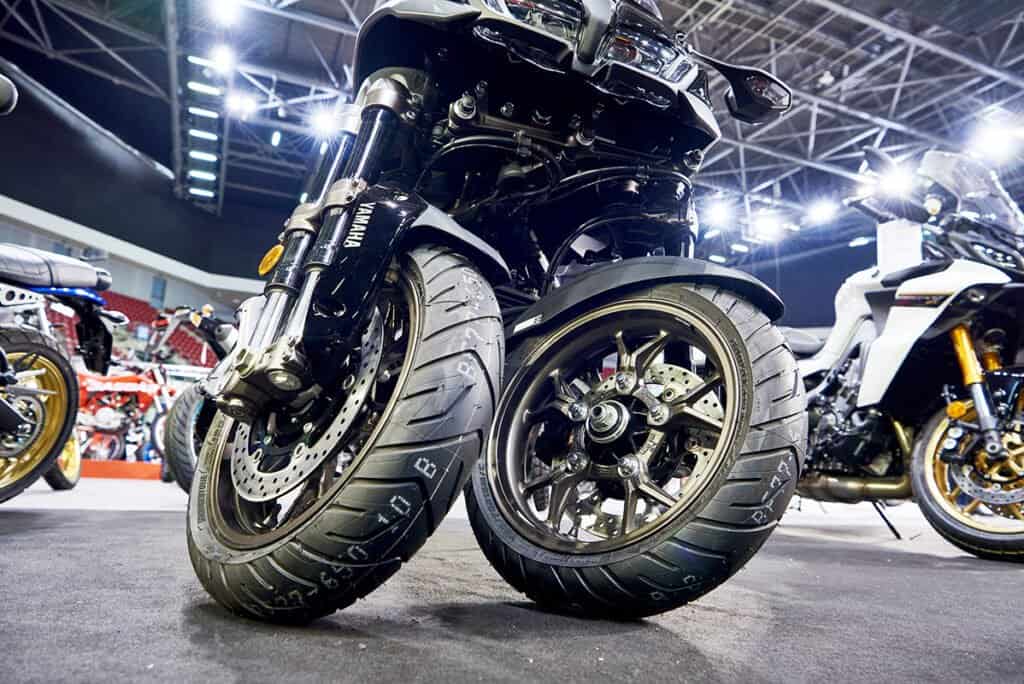

Okay, let’s talk about the elephant in the room. Or rather, the two front wheels in the room.
The Niken’s Leaning Multi-Wheel (LMW) system is what makes this motorcycle either fascinating or ridiculous, depending on who you ask. It’s the reason the bike exists. It’s the reason people stare. And it’s the reason I’ve spent years researching a motorcycle I don’t even own yet.
So how does it actually work? And more importantly—why does it work?
What LMW Actually Means
Leaning Multi-Wheel. Yamaha’s name for their system that lets two front wheels steer and lean together like a conventional motorcycle.
Not a trike. Not training wheels. Not some stability aid for people who can’t balance.
The Niken leans into corners. Properly leans—same angles as any other sport-tourer. The two front wheels tilt together, maintaining contact with the road surface while the whole motorcycle carves through the turn.
Most riders say once they’re moving, they forget about the dual front wheels until they hit a corner or sketchy surface. Then they remember—because suddenly they have grip that shouldn’t be possible.
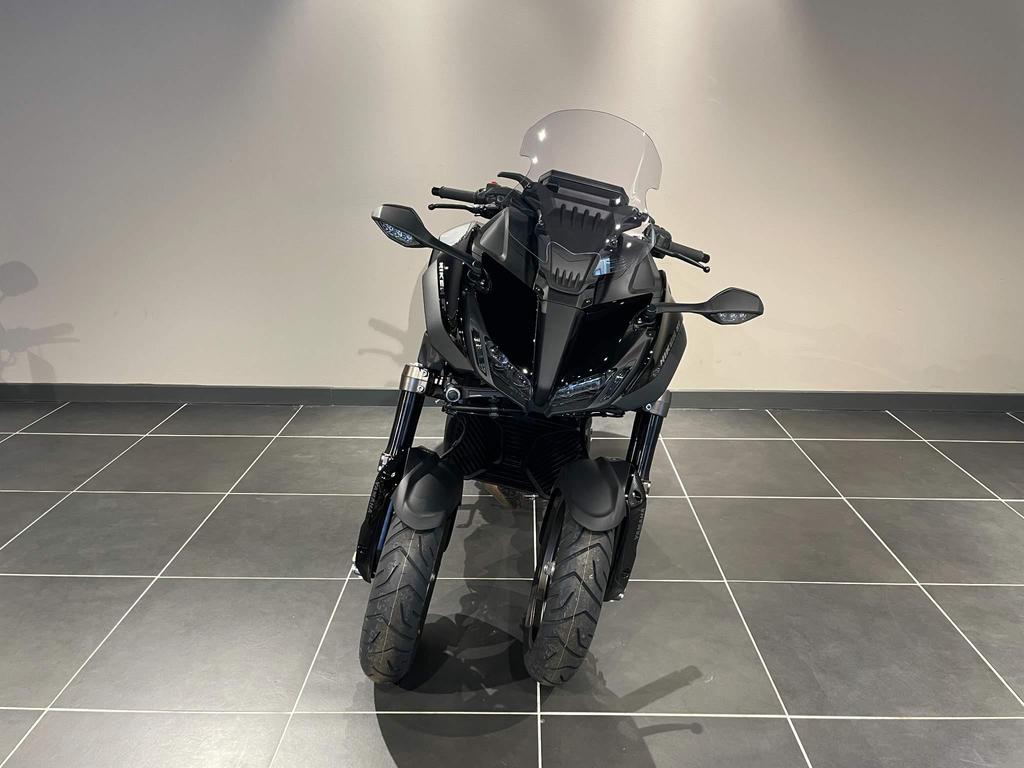
Here’s the LMW system in action (video from Yamaha Motor USA):

The Engineering: Parallelogram Linkage
Here’s where it gets clever.
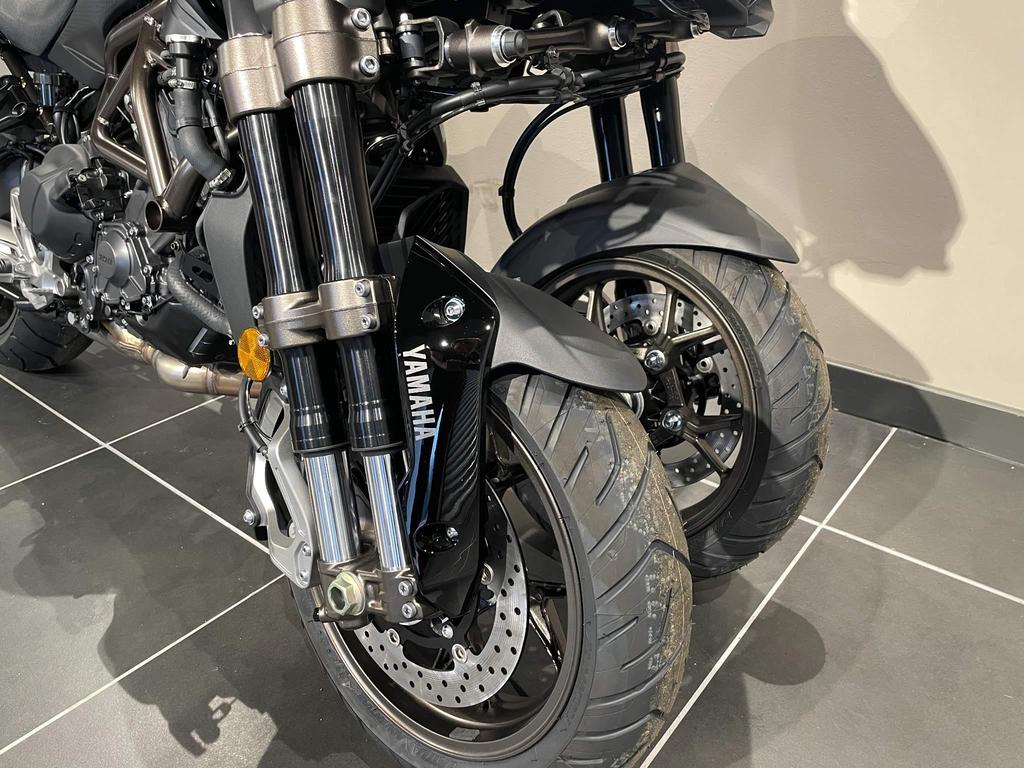
The Niken has four fork tubes—two per wheel. The forward forks contain the actual suspension (shock absorbers). The rear forks act as stabilizers, preventing the wheels from shaking or wandering independently.
This parallelogram linkage ensures both wheels stay aligned with each other and the road surface as the bike leans. They can’t get out of sync. They can’t move independently. They’re mechanically locked together in their relationship to the chassis.
The result? A system that provides enhanced front-end grip without sacrificing lean angle or that fundamental motorcycle feeling of carving through corners.
The Numbers
- Two 15-inch front wheels
- 410mm track width (distance between the wheels)
- Four fork tubes (two per wheel)
- 110mm suspension travel
- Both wheels: 120/70R15 tires
That 410mm track width is crucial. It’s narrow enough that the bike doesn’t feel like a car. It’s wide enough to provide meaningfully increased contact patch. Yamaha could have gone wider or narrower—they chose this width deliberately, and it’s about right.
What You Actually Get: 80% More Contact Patch
Two wheels up front means roughly 80% more rubber touching the road compared to a conventional motorcycle.
That’s not trivial. That’s transformative.
What this means in practice:
Better cornering grip. You can lean harder with more confidence, especially on suspect surfaces.
Massively improved wet-weather capability. Rain that would have you tiptoeing on a conventional bike? The Niken shrugs it off.
More forgiving over mid-corner bumps. Hit a pothole or rough patch mid-lean? One wheel absorbs it while the other maintains grip. You stay upright.
Stronger braking. Two 298mm discs up front with more contact patch means serious stopping power without the front-end diving or washing out.
Confidence on questionable surfaces. Gravel patches, leaves, painted lines, metal grates—all less intimidating with dual front wheels.
What It Feels Like to Ride
People ask this constantly: “Does it feel like a motorcycle?”
Yes. It leans. You countersteer. You shift your weight. Everything you do on a conventional bike, you do on the Niken.
The difference is what happens when conditions get sketchy. On a normal bike, you tense up when the road gets wet or rough. On the Niken, you… don’t. You trust the front end because you can trust the front end.
It’s not magic. It’s just physics. More rubber on the road equals more grip. The LMW system delivers that grip without making you ride differently.
Not a Trike. Seriously.
Let’s be clear: the Niken has nothing in common with traditional trikes.
Traditional trikes:
- Two wheels in back, or two widely-spaced wheels up front
- Don’t lean (they stay flat in corners)
- Handle completely differently from motorcycles
- Require different techniques and often a different license
The Niken:
- Two wheels up front, 410mm apart
- Leans like a motorcycle
- Handles like a motorcycle (with extra front grip)
- No special license required
Calling the Niken a trike is like calling a sport-tourer a scooter because they both have fairings. Technically both have wheels, but that’s where the similarity ends.
Where LMW Shines
The system particularly excels in scenarios where conventional motorcycles struggle:
- Wet roads: Rain becomes far less intimidating
- Uneven surfaces: Mid-corner bumps don’t unsettle you
- Tight technical corners: Confidence to push harder
- Light gravel/dirt: More margin for error
- Long touring days: Less fatigue from constantly managing front-end traction
Basically, the LMW system takes situations that would normally require caution and makes them… manageable. Not effortless, but significantly less stressful.
The Trade-Off
Nothing’s free. The extra front-end grip comes with weight (270kg), complexity (four fork tubes to maintain), and width (410mm makes filtering tighter than a conventional bike).
Low-speed maneuvering requires more muscle. Parking takes planning. U-turns in tight spaces are… interesting.
But on the road—actually riding—the system delivers exactly what Yamaha promised: motorcycle feel with enhanced front-end stability and grip.
Why I’m Obsessed
This is the part where I admit bias: I think the LMW system is brilliant.
Not because it’s perfect. Not because everyone needs it. But because Yamaha tried something genuinely new and made it work. They didn’t build a trike. They didn’t build a motorcycle with training wheels. They built a leaning motorcycle with enhanced front-end grip, and it actually feels like a motorcycle.
That’s engineering. That’s innovation. And that’s why even though they discontinued it, I’m still here writing about it.
Niken owners: How would you describe the LMW system to someone who’s never ridden one? What clicked for you when you first experienced it? Let me know in the comments.